Better primary care for pregnant mothers will also nurse the public purse
Primary healthcare facilities across some Tshwane subdistricts are using Umbiflow, a low-cost, accurate and easy-to-use mobile Doppler ultrasound device developed by the CSIR to enable public-sector nurses and midwives to assess blood-flow to a growing fetus.
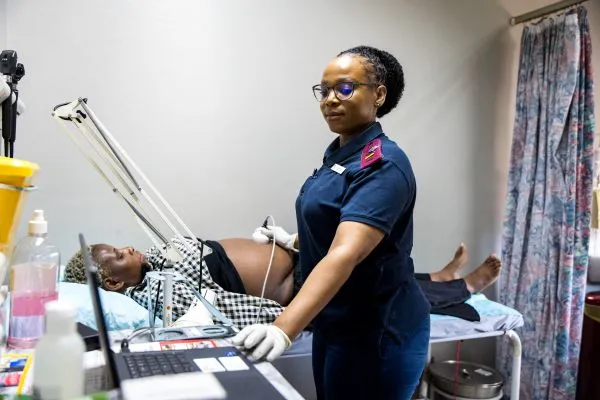
"Traditionally, when a pregnant woman visits a clinic, a nurse or midwife uses a measuring tape to estimate how the unborn baby is growing by measuring the size of the uterus (womb) on the mother’s abdomen (tummy),” says Dr Kahesh Dhuness, a lead CSIR electronic engineer behind the Umbiflow device. Although this is an internationally accepted method, he says it does not always identify unborn babies that are not growing as they should, and maybe are at risk of stillbirth, as the measurement may be affected by other factors such as the mother’s body size or position of the baby in the womb.
Dr Louisa Seopela from the University of Pretoria's Research Centre for Maternal, Fetal, Newborn and Child Health Care Strategies says there are about 20 000 stillbirths in South Africa every year.
"The problem is that the majority of stillbirths happen in low-risk women," she says.

Seopela explains that the placenta plays a vital role in pregnancy by supplying the growing baby with oxygen and nutrients. However, traditional methods may not easily detect when the placenta is not functioning properly or when a fetus (unborn baby) is not growing normally. This is especially true for pregnancies that appear to be at low risk of stillbirth at the first checkup.
The South African Medical Research Council approached the CSIR to help address this public healthcare challenge through technology.
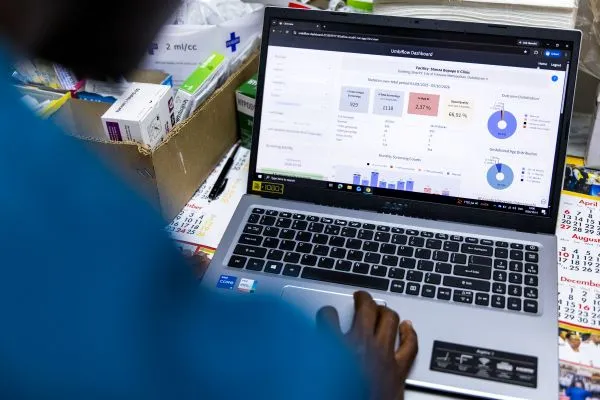
"We can now track the use of Umbiflow across clinics over time. By collecting and analysing thousands of screening records, we can identify gaps in implementation, see which clinics may need additional support and training, and identify areas where our healthcare system needs strengthening," says Dhuness.
As a clinician, Seopela says the dashboard is also one of her favourite aspects of the Umbiflow system. "Managers can actually access the dashboard and see how their clinics are doing."
Without the bird's eye view of digital records and data analysis, clinicians are flying blind.
Dhuness explains that sophisticated ultrasound machines used in public hospitals, along with the specialised personnel required to operate them, are considerably more expensive than using Umbiflow for screening at primary healthcare clinics.
Naledi's story is all too common in South Africa, and in many countries battling with maternal healthcare in the public sector.
Seopela says that clinical research findings show that Umbiflow can make a measurable difference in the care of pregnant mothers and babies in the developing world.
And, she says, it also improves the morale and confidence of nurses and midwives caring for them.
"They know how it works. The Doppler ultrasound is a technique which they have used before to listen to the fetal heart. Now we are assessing the umbilical cord."
Joy Molemi, a nurse at the Hercules Clinic in Daspoort in Pretoria says the Umbiflow system was easy to learn and helps staff detect and deal with a pregnancy problem before it turns into a crisis. "We need this, especially on the ground, at primary level, because that's where our screening starts," she says. "It makes our life easier and the lives of our colleagues that are working at tertiary hospitals easier as well."
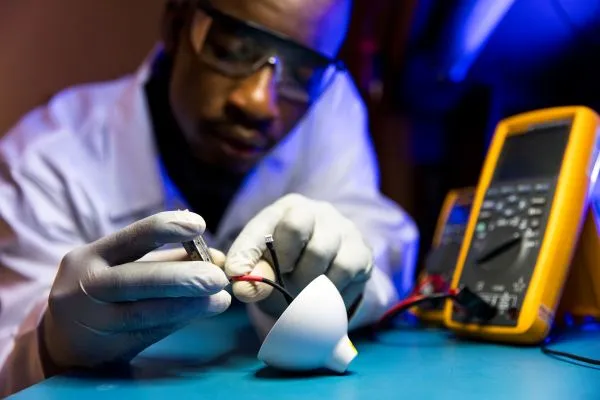
Dhuness and his team at the CSIR say the clinical research results validate years of design and manufacturing work to optimise Umbiflow for low-resource settings.
For Dhuness, rolling Umbiflow out more widely could ultimately help avoid unnecessary but costly hospital referrals, support earlier intervention for high-risk pregnancies and feed data into a central dashboard to guide better health planning.
"As we expand the programme, I expect it to make an even bigger difference not only to the mothers, but also the babies whose lives are saved." He says this proudly South African invention is thus not just a tool for nurses and midwives, but a cost-saver for mothers and the state – a nurse for the public purse.
Seopela adds that for her, it helps identify unborn babies at risk who might otherwise go undetected through routine antenatal care, allowing earlier intervention and closer monitoring of pregnancies that need it.
Enquiries:
Kahesh Dhuness
Email: @email
Published 18 November 2026